

How Early ABA Therapy Shapes Child Development: Key Benefits and Impact on Autism
Early Applied Behavior Analysis (ABA) therapy harnesses the science of learning to improve social, communication, and adaptive skills in young children with autism and developmental delays. By combining discrete trial training, modeling, and positive reinforcement, early ABA leverages childhood neuroplasticity to establish foundational behaviors and reduce challenges. This article maps how early ABA therapy supports core developmental domains, details its delivery models and parental role, outlines progress-tracking methods, and highlights long-term outcomes, all while illustrating evidence-based approaches to foster independence and school readiness.
What Is Early ABA Therapy and Why Is It Important?
Early ABA therapy is a structured intervention that defines target behaviors, applies reinforcement contingencies, and systematically measures outcomes to shape learning and reduce hindering patterns. It operates on behavior-analytic principles—antecedent, behavior, consequence—to teach communication, social interaction, and daily living skills. For instance, a toddler learning to request a toy using simple words can generalize that skill across settings, illustrating how early ABA maximizes critical windows of brain development.
Research consistently highlights the critical nature of early intervention for children with autism spectrum disorder.
Early Intensive Behavioral Interventions for Autism Spectrum Disorder
Recent research suggests that the most effective results stem from early intensive behavioural interventions. Although many questions remain concerning the optimal age at which treatment should begin, the intensity of treatment and the many other variables that may affect outcome, there is growing evidence of general strategies that can be effective in ameliorating the problems associated with autism.
Starting ABA before age three capitalizes on heightened synaptic remodeling, making it easier to embed positive habits and mitigate challenging behaviors long term. Embedding personalized, evidence-based strategies at an early stage fosters greater gains in language acquisition, peer engagement, and adaptive functioning than delayed interventions.
What Is Applied Behavior Analysis (ABA) Therapy?
Applied Behavior Analysis therapy is a clinically validated approach that breaks skills into small, measurable steps and reinforces each correct response immediately. It targets observable behaviors, uses data-driven decision-making, and adapts prompts and reinforcements to individual needs. This methodology builds reliable patterns of communication, play, and self-care by rewarding incremental progress.
Why Does Early Intervention Matter in Child Development?
Yes, early intervention matters because the young brain’s plasticity allows for rapid learning and neural rewiring in response to systematic instruction. Critical periods before age three enable stronger connections for language, social cognition, and executive functioning when guided by targeted behavioral approaches. Delaying support risks missed opportunities to establish essential competencies during peak developmental phases.
The role of parents in early intervention is increasingly recognized as a key factor in a child’s developmental progress.
Parent-Implemented Early Intervention for Children with Autism Spectrum Disorder
… parent-implemented early intervention for children with ASDs is beneficial? Most previous reviews of early … large proportion of children with autism have delays in intellectual functioning, …
How Does ABA Therapy Support Children with Autism Spectrum Disorder?
ABA therapy supports children with autism by identifying specific deficits—such as limited eye contact or delayed speech—and teaching replacement skills through consistent reinforcement schedules. It reduces repetitive or self-injurious behaviors by reinforcing alternative, appropriate actions, thereby improving overall quality of life. Families observe measurable improvements in communication frequency and social reciprocity within months of structured programming.
What Are the Main Benefits of Early ABA Therapy for Child Development?

Early ABA therapy improves core communication abilities by teaching both verbal and non-verbal expressions through prompt fading and functional communication training. It leverages positive reinforcement to replace gestures or tantrums with requests and descriptive language, accelerating vocabulary growth and comprehension. Children frequently progress from single-word requests to simple sentences within a year of consistent intervention.
Parents report that early ABA enhances social engagement by reinforcing eye contact, shared play, and turn-taking. Structured play sessions and social skills groups cultivate peer interaction, empathy, and cooperative behaviors. These gains ease transitions to preschool settings and support smoother peer inclusion.
Cognitive and adaptive behavior growth emerges as ABA fosters problem-solving, task completion, and self-help skills like dressing or feeding independently. By breaking complex routines into teachable steps, therapy builds confidence and autonomy. Improved adaptive functioning correlates with reduced caregiver stress and sustained developmental momentum.
How Does ABA Improve Communication and Language Skills?
ABA improves communication by first identifying a child’s preferred reinforcers, then pairing them with successive approximations of targeted vocalizations or gestures. Through functional communication training, a child learns to use words or picture cards instead of challenging behaviors to express needs. Over time, reinforcing spontaneous language leads to generalized speech across contexts.
In What Ways Does ABA Enhance Social Interaction and Play?
ABA enhances social skills by embedding turn-taking and sharing as part of discrete trials, then transitioning those skills to natural play routines. Therapists model desired interactions, prompt appropriate responses, and reinforce peer-directed play, fostering joint attention and cooperative games. Consistent practice in group settings solidifies social reciprocity and imaginative play.
How Does ABA Support Cognitive and Adaptive Behavior Growth?
ABA supports cognitive growth by teaching problem-solving frameworks—such as “first-then” sequences—and reinforcing correct choices. Adaptive behavior training breaks daily living tasks into manageable steps, using chaining techniques to promote self-care. These methods yield measurable gains in independence, from following multi-step instructions to mastering personal hygiene routines.
How Is Early ABA Therapy Delivered and What Role Do Parents Play?
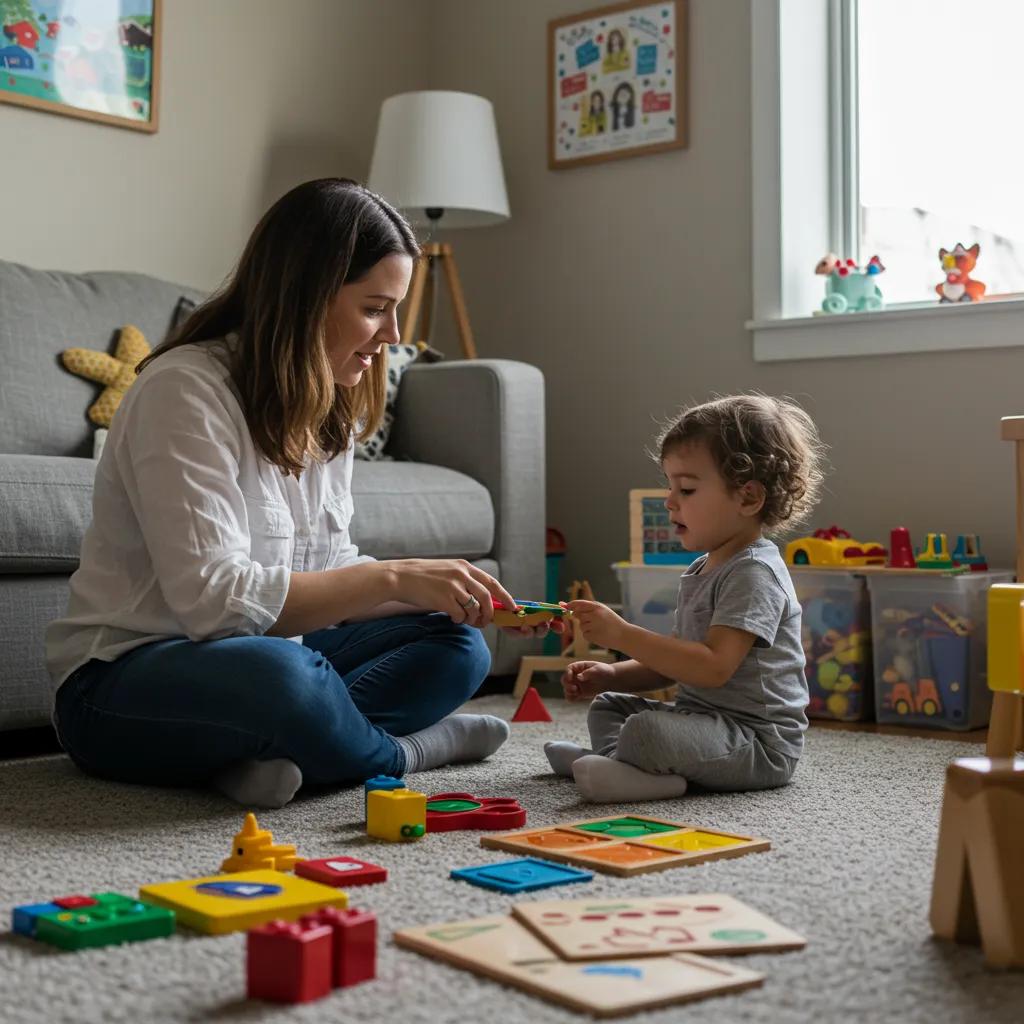
Early ABA therapy is delivered through in-home sessions, clinic-based programs, telehealth consults, and social skills groups, each tailored to a child’s environment and family routine. Behavior analysts design individualized treatment plans that specify session structure, target goals, and data-collection methods. Providers maintain close collaboration with caregivers to ensure consistency across settings.
Parental involvement in therapy significantly impacts a child’s progress and the therapist’s effectiveness.
Early Intensive Behavioral Intervention for Autism: Parental Self-Efficacy
Specifically, we hypothesized that parent therapists would … working with children with more severe symptoms of autism and when they felt less supported by …
| Setting | Description | Key Benefit |
|---|---|---|
| In-Home | Therapy delivered in natural environments such as home | Promotes skill generalization in daily life |
| Telehealth | Virtual sessions with real-time coaching and feedback | Enhances access and caregiver empowerment |
| Social Groups | Structured peer interactions led by trained therapists | Builds cooperative play and social cues |
What Are the Different ABA Therapy Settings: In-Home, Telehealth, and Social Skills Groups?
Providers offer in-home ABA to teach skills amid familiar routines, telehealth coaching to guide parents remotely, and social skills groups to practice peer interactions in a controlled setting. Each model reinforces target behaviors across contexts, optimizing generalization and caregiver involvement.
How Do Behavior Analysts and Therapists Customize ABA Programs?
Behavior analysts conduct functional assessments to identify learning profiles and barriers, then develop individualized curricula with measurable objectives. They adjust prompts, reinforcers, and task complexity based on ongoing data analysis, ensuring that each child’s plan evolves in step with their progress.
What Strategies Can Parents Use to Reinforce ABA Learning at Home?
Families can reinforce ABA strategies by embedding brief practice opportunities throughout daily routines, using consistent praise and preferred items to reward correct responses. Maintaining simple charts, following therapist-recommended prompt hierarchies, and practicing skills during mealtimes or play sessions accelerates generalization and fosters collaborative learning.
How Is Progress Measured and What Developmental Milestones Does ABA Address?
Progress in early ABA therapy is tracked through continuous data collection on target behaviors, graphing performance trends, and adjusting treatment plans accordingly. Therapists monitor milestones such as first words, eye contact, independent play, and self-help routines to gauge developmental trajectories.
Which Key Developmental Milestones Are Targeted by Early ABA Therapy?
ABA targets milestones including intentional communication (first words), social reciprocity (sharing and turn-taking), functional play (pretend sequences), and self-care skills (handwashing, dressing). Achieving these benchmarks reflects gains in language, social cognition, and adaptive independence.
How Do Therapists Monitor and Adjust ABA Treatment Plans?
Therapists use session logs, frequency counts, and latency measures to evaluate each child’s response to interventions. Weekly or monthly reviews inform modifications in reinforcement schedules, task difficulty, and goal selection, ensuring that programs remain aligned with emerging abilities.
What Are the Long-Term Outcomes and Common Questions About Early ABA Therapy?
Early ABA therapy prepares children for school by reinforcing classroom-ready skills like following group instructions, waiting turns, and completing simple tasks independently. These competencies foster greater academic engagement and peer acceptance, paving the way for successful inclusion in mainstream settings.
Misconceptions about ABA often center on rigid protocols or over-reliance on rewards, but modern approaches emphasize naturalistic teaching, child-led interactions, and intrinsic motivation. Understanding these evolved practices clarifies why ABA remains the gold standard for early autism intervention.
Families can access support through community-based resources, parent training workshops, and collaborative networks of professionals, ensuring continued progress beyond initial programs. Ongoing guidance and peer mentorship reinforce sustainable skill development and family well-being.
Early ABA therapy’s evidence-driven framework, flexible delivery models, and active caregiver involvement combine to shape critical developmental skills, support long-term independence, and improve quality of life for children with autism. Exploring personalized ABA services can unlock each child’s potential through targeted, supportive interventions.