

Unlocking Motivation in ABA Sessions: Effective Strategies to Increase Client Engagement and Success
Motivation drives every successful Applied Behavior Analysis session by transforming passive compliance into active skill acquisition. Clinicians often struggle with contriving motivation in ABA sessions, leading to stalled progress and client disengagement. This guide defines motivation in ABA, explores assessment methods, details proven engagement strategies, addresses common obstacles, and outlines ethical best practices. Alongside these insights, practitioners can integrate comprehensive therapy solutions—such as those offered through Ladder of Success ABA’s individualized programs—to reinforce each strategy without detracting from core clinical objectives.
What Is Motivation in ABA and Why Is It Crucial for Therapy Success?
Motivation in ABA is the learner’s readiness to engage in targeted behaviors, driven by the value of reinforcement and the influence of antecedent operations. High client motivation correlates with faster skill acquisition and lower rates of problem behavior, which directly enhances therapy outcomes.
How Does Motivation Influence Client Engagement in ABA Sessions?
Motivation amplifies engagement by making tasks worthwhile, increasing responsiveness to instruction and reducing avoidance behaviors. This dynamic underpins every successful trial and transition.
What Are Motivational Operations and How Do They Affect Behavior?
Motivational operations (MOs) are environmental events that alter reinforcer value and behavior frequency. Establishing operations heighten the appeal of a consequence, while abolishing operations reduce it, guiding session planning.
How Does Reinforcement Drive Motivation in ABA Therapy?
Reinforcement enhances motivation by pairing desired behaviors with valued outcomes. Positive and negative reinforcement each increase behavior frequency when applied contingently.
Before comparing reinforcement types, the table below outlines how each category shapes motivation:
| Reinforcement Type | Defining Feature | Motivational Impact |
|---|---|---|
| Positive Reinforcement | Presentation of a preferred stimulus | Increases behavior by adding valued outcomes |
| Negative Reinforcement | Removal of an aversive condition | Increases behavior by alleviating discomfort |
| Primary Reinforcement | Naturally reinforcing (e.g., food) | Drives basic survival-related motivation |
| Secondary Reinforcement | Learned reinforcement (e.g., tokens) | Builds complex skill motivation over time |
This comparison clarifies how selecting the appropriate reinforcement type directly boosts client engagement and paves the way for precise assessments.
How Can Preference and Reinforcer Assessments Unlock Client Motivation?
Assessments systematically identify what clients value most, ensuring that sessions are built around true motivators rather than assumptions. Accurate assessment is the foundation for contriving motivation in ABA sessions.
What Types of Preference Assessments Are Used in ABA?
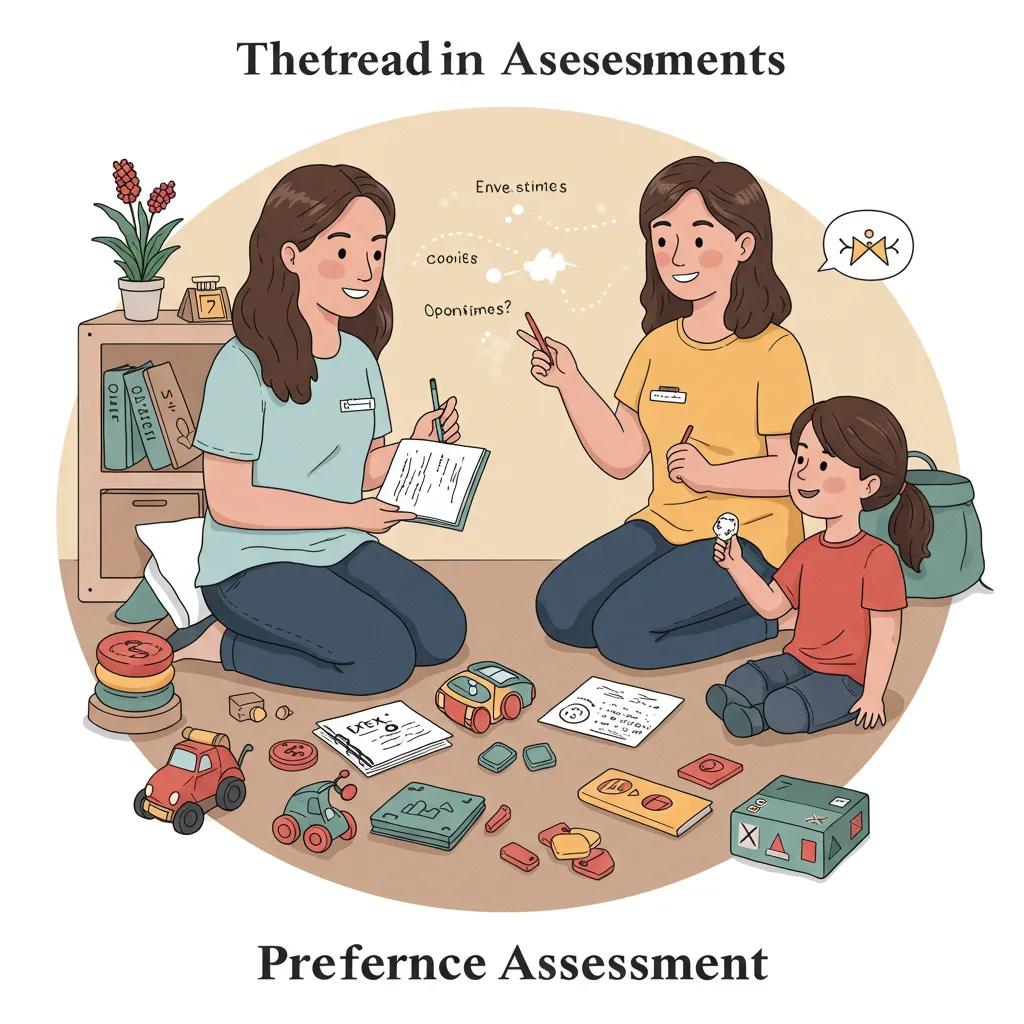
Several standardized methods reveal client preferences:
- Paired-Stimulus Assessments present two items together to record choice frequency.
- Multiple Stimulus Without Replacement rotates selections to rank multiple reinforcers.
- Free Operant Observations let clients interact freely to gauge natural engagement.
Each assessment uncovers distinct preference hierarchies and informs individualized reinforcement planning.
How Do Reinforcer Assessments Confirm Effective Motivators?
Reinforcer assessments directly test whether selected items genuinely increase target behaviors. By delivering potential reinforcers contingent on brief trials, practitioners verify true motivational power and adjust therapy accordingly.
What Are Proven ABA Motivation Strategies to Increase Engagement?
Integrating evidence-based tactics ensures high levels of client participation and mastery. These strategies work together to contrive motivation in ABA sessions consistently.
How Does Pairing Build Rapport and Enhance Motivation?
Pairing involves associating the therapist with preferred stimuli before instruction.
- Step 1: Deliver a preferred item spontaneously.
- Step 2: Engage in neutral interaction while offering the item.
- Step 3: Fade item delivery as rapport solidifies.
Effective pairing fosters positive associations that lead into skill-focused work.
How Can Behavioral Momentum Be Used to Boost Compliance?
Behavioral momentum employs a sequence of high-probability requests followed by a target task. This high-to-low demand sequence increases the likelihood of compliance on challenging tasks by leveraging established response momentum.
The concept of behavioral momentum, particularly its application in autism intervention, is a well-researched area that explains how prior responses can influence future behavior.
Behavioral Momentum Theory in Autism Intervention
Behavioral momentum theory (BMT) is a quantitative model used to describe the persistence of behavior in the face of varying challenges (e.g., extinction, distraction). Generally, BMT predicts that responses that occur under stimulus conditions associated with denser reinforcement will persist in the face of challenges to a greater extent than responses that occur under conditions associated with leaner reinforcement. In this chapter, we consider ways in which BMT has made contact with the literature on behavioral intervention for persons with autism spectrum disorder (ASD) and other neurodevelopmental disorders. We first review early studies that sought simply to establish the relevance of BMT for understanding behavior in these populations. We then discuss how the momentum framework has been implicated in programs to both strengthen adaptive behavior and decrease problem behavior. Recent basic research on BMT has revealed that the set of variables that predict response persistence similarly influence various forms of behavioral reemergence or relapse. We consider how these findings have recently been brought to bear on the concept of treatment relapse in neurodevelopmental disorders. Throughout the chapter, we offer a variety of questions raised about these relations and future avenues for research on the applied implications, many involving how BMT intersects with core diagnostic features of ASD.Implications of behavioral momentum theory for intervention in autism spectrum disorder, IG DeLeon, 2015
How Do Token Economies and Reinforcement Schedules Work in ABA?
Structured systems reinforce incremental progress and maintain motivation across sessions. The table below illustrates common schedules:
| Schedule Type | Delivery Rule | Client Experience |
|---|---|---|
| Fixed Ratio | After a set number of responses | Predictable rewards encourage rapid skills |
| Variable Ratio | After a fluctuating number of responses | Sustained effort due to reward unpredictability |
| Fixed Interval | After a set time period | Builds anticipation and steady engagement |
| Variable Interval | After an unpredictable time period | Maintains consistent effort over time |
Reinforcement schedules aligned with client needs sustain interest and drive continuous participation.
Token economies are a widely recognized and effective strategy for managing behavior and reinforcing progress, especially within the context of autism spectrum disorder interventions.
Token Economy Interventions for Autism Spectrum Disorder
The token economy is considered a valuable intervention in the treatment of individuals with an autism spectrum disorder (ASD). This chapter provides the reader with important considerations and guidance in arranging and implementing a token economy for individuals with ASD based on basic and applied research findings as well as our collective clinical experiences. The chapter reviews the use of conditioned reinforcement in token economies and options for clinicians to establish tokens as reinforcers. The considerations and steps involved in arranging a token economy are outlined and include: token identification, target behavior identification, schedule of reinforcement, backup reinforcement, exchange procedures, behavioral goal identification and data collection, and token economy fading. The chapter discusses the use of response cost within token economies. Other topics related to the use of token economies are also discussed, including training others to implement the token economy and the use of contingency contracting and group contingencies.Token economy for individuals with autism spectrum disorder, ST Pence, 2015
How Can Naturalistic Teaching and Intrinsic Motivation Be Leveraged?
Natural Environment Teaching embeds learning within daily routines and interests, promoting intrinsic motivation by tying instruction to personally meaningful activities. This approach increases generalization and enduring engagement.
Naturalistic interventions offer a child-centered approach that leverages everyday settings and activities to foster skill development and intrinsic motivation.
Naturalistic Interventions in ABA for Autism
Naturalistic interventions use ABA principles in everyday settings, focusing on child-initiated activities and interests to teach a variety of skills to autistic children. These methods aim to teach skills through loosely structured prompts and natural reinforcement, effectively enhancing communication, play, school readiness, self-help, and social skills among children on the autism spectrum. For example, Pivotal Response Training (PRT) emphasizes child choice, task variation, and natural reinforcement to increase motivation and responsiveness to environmental cues, addressing challenges like stimulus overselectivity and fostering pivotal behaviors such as self-initiation and self-management. Incidental Teaching (IT), an early form of naturalistic intervention, enhances language skills by arranging the environment with engaging but inaccessible items, requiring the child to initiate interaction, thus promoting language development and generalization beyond structured teaching sessions. These naturalistic approaches offer effective strategies for behavioral intervention, emphasizing the need for interventions that are both engaging and adaptable to the child’s natural environment and interests.Naturalistic Intervention, Unknown Author, 2024
What Role Does Gamification and Technology Play in ABA Motivation?

Digital tools and game-like formats tap into intrinsic drives for exploration and mastery. Common options include:
- Interactive learning apps with instant feedback and leveling.
- Visual token-board platforms that animate progress.
- Virtual reality scenarios for social-skill practice.
These innovations diversify session formats and maintain enthusiasm for learning.
How Do You Overcome Common Motivational Challenges in ABA Sessions?
Addressing obstacles like fatigue and reinforcer depletion ensures sustained progress. Tailored adjustments keep sessions productive.
What Strategies Help Maintain Motivation During Long or Difficult Sessions?
Practitioners can rotate high-value tasks with brief, preferred activities to reset engagement.
- Alternate discrete trials with natural play breaks.
- Use short movement or sensory activities as interludes.
- Offer varied reinforcers to prevent monotony.
This cyclical pacing reduces burnout and preserves client interest.
How Can Reinforcer Satiation Be Managed Effectively?
Monitoring reinforcer effectiveness through ongoing data collection alerts therapists to declining appeal. Introducing novel reinforcers or shifting schedules restores motivational value without overuse.
What Are Best Practices for Low Motivation or Non-Compliance?
When motivation dips, clinicians can reassess preference, adjust task difficulty, or incorporate choice making. Providing limited options empowers clients and renews engagement in the learning process.
What Ethical Considerations and Best Practices Support Motivation in ABA?
Ethical motivation strategies respect client dignity, autonomy, and long-term well-being. Embedding choice and assent secures genuine engagement.
How Is Client Assent and Choice Integrated into Motivational Strategies?
Involving clients in selecting reinforcers and instructional formats honors preferences and promotes cooperation. Offering simple “this or that” choices reinforces respect and agency.
How Can Parents and Caregivers Support Motivation at Home?
Parents can mirror preference assessments and token systems in natural contexts.
- Replicate clinic-identified reinforcers during daily routines.
- Use visual schedules and rewards for household tasks.
- Communicate progress and celebrate milestones consistently.
Family involvement extends motivational gains beyond therapy sessions.
How Do You Ensure Generalization and Maintenance of Motivation Over Time?
Systematically fading contrived reinforcers and embedding natural rewards—such as social praise or access to preferred activities—strengthens lasting motivation. Periodic reassessment confirms ongoing effectiveness and adaptability.
Sustained motivation in ABA relies on strategic assessments, dynamic reinforcement, and ethical choice integration. By pairing rapport building with momentum tactics, token economies, naturalistic teaching and innovative technology, practitioners can contrive motivation in ABA sessions effectively. Ongoing data review and family collaboration prevent stagnation and generalize gains across environments. For tailored support, practitioners may consult a Board Certified Behavior Analyst or explore specialized ABA therapy services like those offered by Ladder of Success ABA.